
If you’re a homeowner in New York, New Jersey, or Pennsylvania, you know the swimming season can feel short. Cool spring mornings, chilly nights, and unpredictable weather often limit how much you can actually enjoy your pool.
That’s where choosing the right pool heater makes all the difference.
At Combined Energy Services, we help Tri-State homeowners extend their pool season with reliable, energy-efficient heating solutions. But the big question remains:
👉 Should you choose a gas (propane) pool heater or an electric heat pump?
Let’s break it down so you can make the best decision for your home.
🔥 Gas (Propane) Pool Heaters: Fast, Reliable Heat
Best for: Homeowners who want quick heating and maximum flexibility
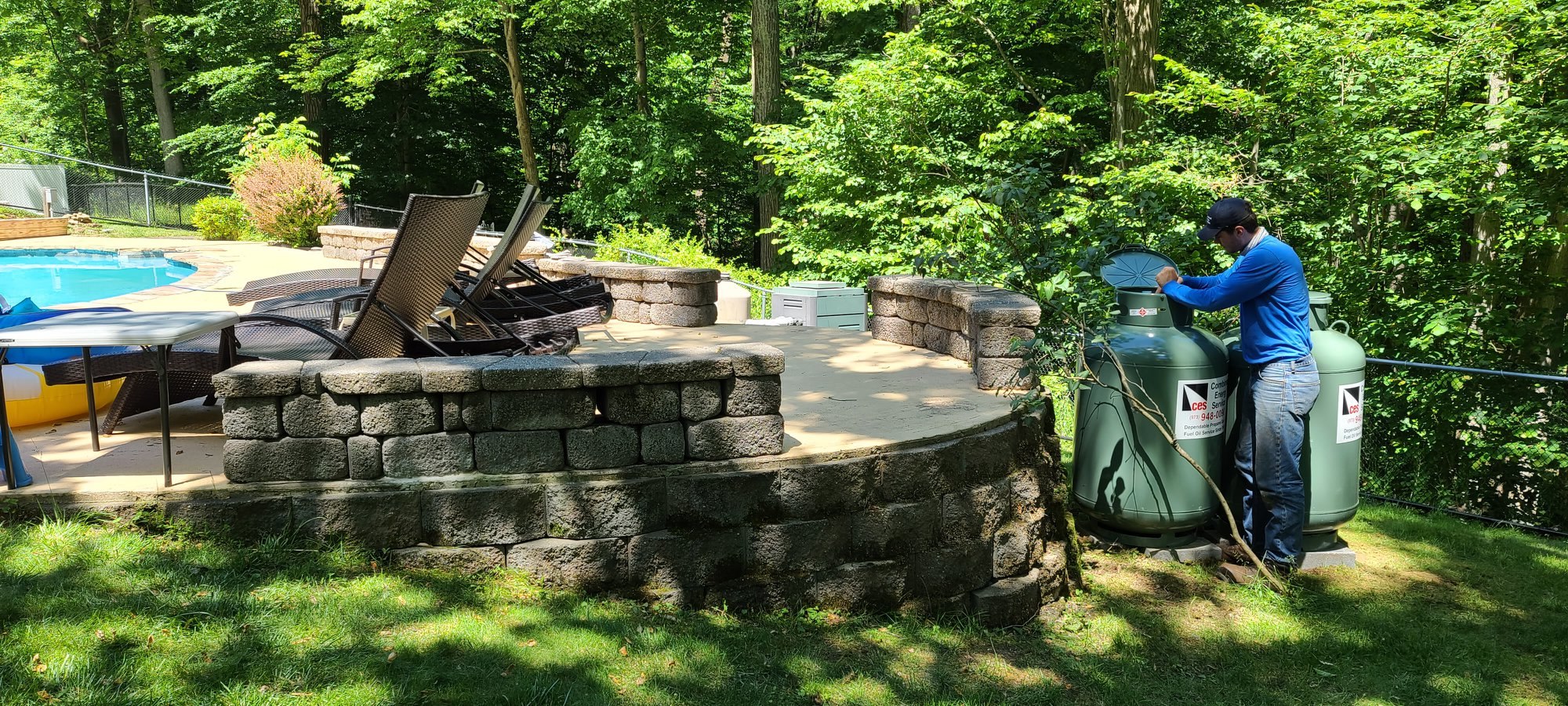
✅ Key Benefits
- Fast heating: Warms your pool in hours—not days
- Works in any weather: Ideal for the Tri-State’s fluctuating spring/fall temps
- On-demand use: Heat your pool only when you need it
- Extends season significantly: Start swimming earlier and keep going later
⚠️ Considerations
- Higher fuel cost compared to electric (but used only when needed)
- Requires propane tank installation (which Combined Energy Services handles)
📍 Local Insight:
In the Hudson Valley, Catskills, and Northeast PA, where spring nights can drop into the 40s, propane pool heaters outperform electric options in real-world conditions.
⚡ Electric Pool Heat Pumps: Energy Efficient (in the Right Conditions)
Best for: Homeowners in consistently warm climates or those maintaining steady temperatures
✅ Key Benefits
- Energy efficient: Lower operating cost in warm weather
- Environmentally friendly: Uses ambient air to generate heat
- Great for maintaining temperature: Ideal if your pool is always heated
⚠️ Limitations
- Slow heating: Can take days to raise pool temperature
- Temperature dependent: Struggles when air temps drop below ~50°F
- Less effective in early spring and late fall in the Tri-State
📍 Local Insight:
Because Tri-State weather fluctuates so much, many homeowners find electric heat pumps can’t keep up during shoulder seasons.
🆚 Gas vs Electric Pool Heating: Side-by-Side Comparison
| Feature | Propane (Gas) Heater | Electric Heat Pump |
| Heating Speed | 🔥 Fast (hours) | धी Slow (days) |
| Performance in Cold Weather | ✅ Excellent | ❌ Limited |
| Upfront Cost | Moderate | Higher |
| Operating Cost | Moderate | Lower (in warm temps) |
| Best Use | On-demand heating | Constant temperature maintenance |
| Season Extension | ⭐⭐⭐⭐⭐ | ⭐⭐ |
🏊♂️ What’s Best for Tri-State Homeowners?
For most homeowners in NY, NJ, and PA, the answer is clear:
👉 Propane pool heaters are the better choice for performance, comfort, and season extension.
Why?
- You can open your pool earlier (April/May)
- You can keep swimming into September or October
- You’re not dependent on warm air temperatures
- You get instant heat when you want it
Electric heat pumps can work well in peak summer—but they often fall short when you need heat the most.
🌱 Why Choose Combined Energy Services?
As a trusted provider across the New York, New Jersey, and Northeast Pennsylvania, Combined Energy Services offers:
- Expert pool heater installation (propane & hybrid systems)
- Reliable propane delivery and tank monitoring
- Customized recommendations based on your property
- Local service you can count on
❓ FAQs
Is a propane pool heater worth it in New York, New Jersey & Pennsylvania?
Yes—especially for extending your swimming season and heating your pool quickly in cooler temperatures.
What temperature do electric pool heaters stop working effectively?
Most lose efficiency below 50–55°F, which is common in the Tri-State during spring and fall.
Which pool heater is cheaper to run?
Electric heat pumps are cheaper in warm weather, but propane heaters can be more cost-effective overall due to faster heating and shorter run times.
Can I heat my pool year-round in the Tri-State?
With a propane heater, you can significantly extend your season, though winter use may require additional considerations like covers or enclosures.
Get a free quote today from Combined Energy Services for your propane pool heater.